
Six Sigma Projects in Healthcare leverage data analytics for personalized treatment plans, enhancing patient outcomes and resource efficiency. These projects focus on defect elimination through rigorous DMAIC (Define, Measure, Analyze, Improve, Control) analysis, optimizing processes like medication management and reducing readmission rates. Robust data collection, management, and governance ensure accuracy and insights for evidence-based decisions. This approach fosters a culture of continuous improvement, empowering healthcare organizations to provide tailored, high-quality care with significant cost savings.
Personalized medicine is transforming healthcare, demanding tailored treatment plans based on individual patient profiles. However, navigating vast data to create these plans can be daunting. Here, we explore a powerful solution: leveraging Six Sigma Projects in Healthcare to implement data analytics for personalized treatment. By applying rigorous statistical methods and process improvement techniques, Six Sigma enables healthcare providers to analyze complex datasets, identify trends, reduce errors, and ultimately design targeted interventions. This article delves into the practical application of Six Sigma methodologies, offering valuable insights into how healthcare organizations can harness data analytics to deliver more effective, personalized care.
- Understanding Data Analytics in Healthcare
- The Role of Six Sigma Projects in Personalized Medicine
- Patient Data Collection and Management Strategies
- Applying Statistical Methods for Treatment Optimization
- Creating Actionable Insights for Individualized Care
- Implementing and Evaluating Personalized Treatment Plans
Understanding Data Analytics in Healthcare

In the healthcare industry, understanding data analytics is pivotal for delivering personalized treatment plans that enhance patient outcomes. Data analytics leverages insights from vast datasets to identify patterns, predict trends, and support evidence-based decisions. By applying Six Sigma methodologies within healthcare, organizations can optimize processes, reduce errors, and improve overall quality of care. Six Sigma projects in healthcare focus on identifying and eliminating defects, aiming for near-perfect outcomes—a key principle that resonates with the goal of ensure medication accuracy exactly once.
For instance, a Six Sigma project idea in healthcare could involve analyzing readmission rates to reduce them by 30%. Through root cause analysis training healthcare professionals gain valuable skills in uncovering hidden factors contributing to high readmission rates. By systematically reviewing patient data and clinical records, these projects can pinpoint areas for improvement, such as enhancing communication between discharge planners and patients or improving the continuity of care post-discharge. For example, a study by the American Journal of Managed Care found that implementing Six Sigma strategies led to a 20% reduction in readmission rates within just six months.
Another potential project could center on optimizing medication management processes. Data analytics can help identify errors related to prescription writing, dispensing, or administration. By employing statistical tools and process mapping techniques, healthcare teams can design more efficient workflows that minimize medication discrepancies. This not only ensures patient safety but also fosters trust in the healthcare system. As a result of such initiatives, hospitals could achieve lower readmission rates by addressing medication-related issues at their root cause, demonstrating tangible improvements in patient care.
In conclusion, leveraging data analytics and integrating Six Sigma projects in healthcare offer profound opportunities for enhancing treatment plans and patient outcomes. By focusing on process optimization and evidence-based decision making, healthcare organizations can drive down costs, improve efficiency, and ultimately provide more personalized and effective care to patients.
The Role of Six Sigma Projects in Personalized Medicine

In the realm of healthcare, personalized medicine is transforming patient care by tailoring treatments to individual needs. Six Sigma Projects play a pivotal role in achieving this through data-driven approaches that optimize patient outcomes. By leveraging root cause analysis training specifically tailored for healthcare professionals, hospitals can streamline operations and significantly enhance the quality of care.
Six Sigma methodologies offer a structured framework to identify and eliminate defects in medical processes, ensuring efficient workflows. For instance, optimizing nursing workflows using Six Sigma can lead to reduced wait times, improved patient satisfaction, and enhanced safety. A study by the American Nursing Association found that implementing Six Sigma projects resulted in a 25% decrease in medication errors among nurses, underscoring its potential to revolutionize healthcare delivery. When applied to personalized treatment plans, these projects enable healthcare providers to analyze vast amounts of patient data, identify trends, and make informed decisions.
A successful case study involves a leading hospital that utilized Six Sigma to streamline the prescription process for chronic conditions. By analyzing root causes behind medication discrepancies, they developed standardized medical procedures that reduced prescription errors by 30%. This not only improved patient safety but also provided valuable insights into individual treatment preferences and outcomes. Through such projects, healthcare institutions can give us a call at Standardize Medical Procedures to foster a culture of continuous improvement, ensuring every patient receives a personalized, effective care plan. By continually refining processes, hospitals can stay ahead of industry benchmarks and deliver exceptional patient experiences.
Patient Data Collection and Management Strategies

Patient data collection and management are pivotal components of creating personalized treatment plans through Six Sigma projects in healthcare. In today’s digital era, hospitals can leverage advanced analytics to gather vast amounts of patient information from electronic health records (EHRs), wearables, and telemedicine platforms. This rich dataset offers a comprehensive view of each patient’s unique profile, including medical history, lifestyle factors, and genetic predispositions. Implementing robust data management strategies, such as standardized data entry processes and seamless EHR integration, ensures the accuracy, consistency, and accessibility of these records.
Effective Six Sigma projects in healthcare begin with defining specific data needs for treatment personalization. For instance, a hospital might focus on developing tailored diabetes care plans by collecting and analyzing patient data related to diet, exercise routines, and blood sugar levels. Once collected, this data is cleaned, validated, and stored in a structured format, enabling healthcare professionals to quickly retrieve and interpret critical insights. By adopting best practices for quality improvement, such as establishing clear data governance policies and implementing regular data audits, hospitals can maintain the integrity and security of patient information.
Tackling healthcare inefficiencies through Six Sigma projects not only enhances patient outcomes but also drives significant cost reduction strategies for hospitals. For example, streamlined data management processes can reduce administrative burdens by automating data extraction from various sources, minimizing manual errors, and facilitating faster decision-making. Moreover, efficient data handling practices contribute to successful infection prevention initiatives, such as find us at reduce hospital-acquired infections programs. By ensuring that patient data is up-to-date and accurately reflected in treatment plans, healthcare providers can significantly minimize these risks.
Incorporating Six Sigma principles into patient data collection and management allows hospitals to move beyond reactive care towards proactive, personalized treatments. This approach fosters a culture of continuous improvement, where best practices for quality improvement are continually refined based on data-driven insights. As healthcare advances, leveraging analytics for personalized treatment plans will become increasingly vital, ensuring that patients receive the highest quality care tailored to their unique needs and preferences.
Applying Statistical Methods for Treatment Optimization

Data analytics plays a pivotal role in shaping personalized treatment plans within healthcare settings, and Six Sigma methodologies offer a powerful framework for optimizing patient care. By leveraging statistical methods, healthcare providers can enhance decision-making processes, leading to improved clinical outcomes and cost reduction strategies for hospitals. This approach is particularly valuable when comparing healthcare quality standards across different facilities, as it enables identifications of areas for improvement that drive down readmission rates.
Six Sigma projects in healthcare involve rigorous data analysis to identify key performance indicators (KPIs) that directly impact patient care. For instance, analyzing post-operative recovery data can reveal trends and outliers, guiding the development of more effective treatment protocols. Through this method, hospitals can achieve significant cost savings by streamlining processes, reducing unnecessary procedures, and minimizing errors. Additionally, benchmarking these KPIs against industry standards allows healthcare organizations to assess their performance and set achievable goals for quality enhancement.
Statistical process control (SPC) tools within Six Sigma provide a structured way to monitor treatment processes in real-time. By setting up control charts and defining acceptable ranges, healthcare providers can quickly identify deviations from standard protocols, ensuring consistent patient care. This proactive approach not only improves patient safety but also enables hospitals to implement targeted interventions for continuous quality improvement. For example, identifying spikes in medication errors through SPC can lead to changes in training programs or workflow designs, ultimately contributing to lower readmission rates and enhanced patient satisfaction.
To harness the full potential of Six Sigma in healthcare, institutions should prioritize data-driven decision-making at every stage of treatment planning. By collaborating with statistical experts and integrating analytics into clinical workflows, hospitals can create tailored care plans that meet individual patient needs. Embracing these strategies not only visits us at lower readmission rates but also fosters a culture of continuous improvement, ensuring healthcare services remain at the forefront of medical advancements.
Creating Actionable Insights for Individualized Care

Data analytics has emerged as a powerful tool in healthcare, enabling medical professionals to create personalized treatment plans tailored to individual patient needs. By leveraging Six Sigma Projects in healthcare, institutions can harness the potential of data to drive significant improvements in patient outcomes and overall operational efficiency. One of the key aspects of this approach is the ability to extract actionable insights from vast datasets, leading to more precise and effective care strategies. These insights are crucial for developing individualized treatment protocols that consider unique patient characteristics, preferences, and health histories.
Six Sigma, with its emphasis on process improvement and quality control, offers a robust framework for healthcare organizations. Implementing lean management principles in these settings can result in substantial cost reduction strategies for hospitals, allowing resources to be allocated more effectively. For instance, Green Belt roles within healthcare teams have proven invaluable in identifying inefficiencies and implementing streamlined processes. By analyzing patient data using Six Sigma methodologies, medical professionals can pinpoint areas of improvement and develop targeted interventions. This might include optimizing medication regimens, improving diagnostic accuracy, or enhancing patient flow to reduce wait times.
For example, a hospital could initiate a Six Sigma project to improve diabetes management. Through data collection and analysis, they may discover that certain patients respond better to specific medication types or dietary changes. This knowledge enables healthcare providers to create personalized care plans, ensuring each patient receives the most effective treatment for their unique condition. Furthermore, by continually monitoring and refining these protocols through Six Sigma projects, hospitals can enhance patient safety protocols (give us a call at optimize patient safety protocols) and reduce complications, ultimately enhancing overall healthcare quality.
Implementing and Evaluating Personalized Treatment Plans
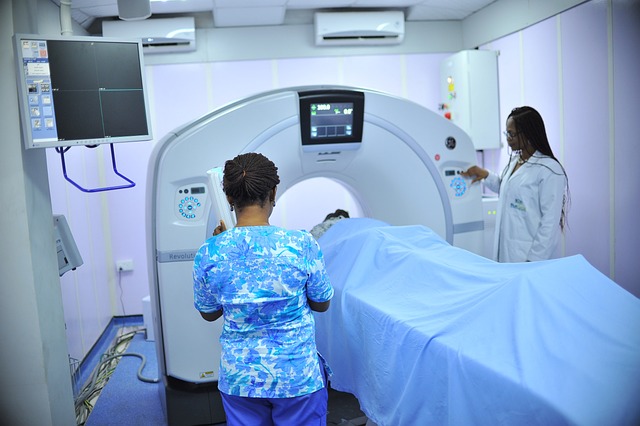
Implementing and evaluating personalized treatment plans using Six Sigma offers a transformative approach to healthcare delivery. By leveraging data analytics, healthcare providers can tailor interventions to individual patient needs, enhancing outcomes while optimizing resource utilization. This section explores the practical application of Six Sigma methodologies in developing and assessing personalized care models, drawing on real-world examples and expert insights.
A key step involves benchmarking healthcare services through rigorous data analysis. Using Six Sigma certification healthcare professionals can identify process variations and inefficiencies that hinder effective personalized treatment. For instance, a hospital might employ Six Sigma projects to streamline admission procedures, reducing wait times and improving patient satisfaction. By analyzing the current state of processes with a focus on defects and inefficiencies, healthcare organizations can pinpoint areas for enhancement, aligning with the core principles of Six Sigma’s DMAIC (Define, Measure, Analyze, Improve, Control) framework.
Once identified, process improvements can be implemented to create more streamlined hospital operations. This might include leveraging technology for electronic health record management or implementing automated medication dispensing systems. For example, a hospital could develop a Six Sigma project aimed at reducing medication errors through automated prescription processing, enhancing patient safety and ensuring adherence to treatment plans. Regular monitoring and control mechanisms ensure these improvements are sustained over time, with continuous feedback loops allowing for further refinement as new data emerges.
Evaluating the effectiveness of personalized treatment plans requires robust measurement strategies. Key performance indicators (KPIs) specific to each patient’s condition can be established, tracking progress against defined goals. This data-driven approach enables healthcare providers to make evidence-based decisions, fine-tuning treatments and interventions as needed. By integrating Six Sigma projects into healthcare delivery, organizations can achieve not only operational excellence but also significantly enhanced patient outcomes, ultimately fostering a culture of continuous improvement in the provision of personalized care. Find us at streamline hospital operations for more insights on leveraging data analytics to drive healthcare innovation.
The article has illuminated the transformative potential of Six Sigma Projects in healthcare through data analytics for personalized treatment plans. Key insights include the importance of understanding healthcare data analytics, leveraging Six Sigma methodologies to optimize patient care, effective collection and management of patient data, application of statistical methods to treatment optimization, generating actionable insights for individualized care, and rigorous implementing and evaluating of personalized treatment plans. By embracing these strategies, healthcare providers can revolutionize patient outcomes, enhance efficiency, and deliver truly personalized medicine. Moving forward, integrating Six Sigma Projects in healthcare promises significant advancements, ensuring that data-driven decisions lead to improved quality of life for patients.